Il mondo in tavola · PanamáThe world at the table · PanamaEl mundo en la mesa · Panamá
Sancocho Panameño
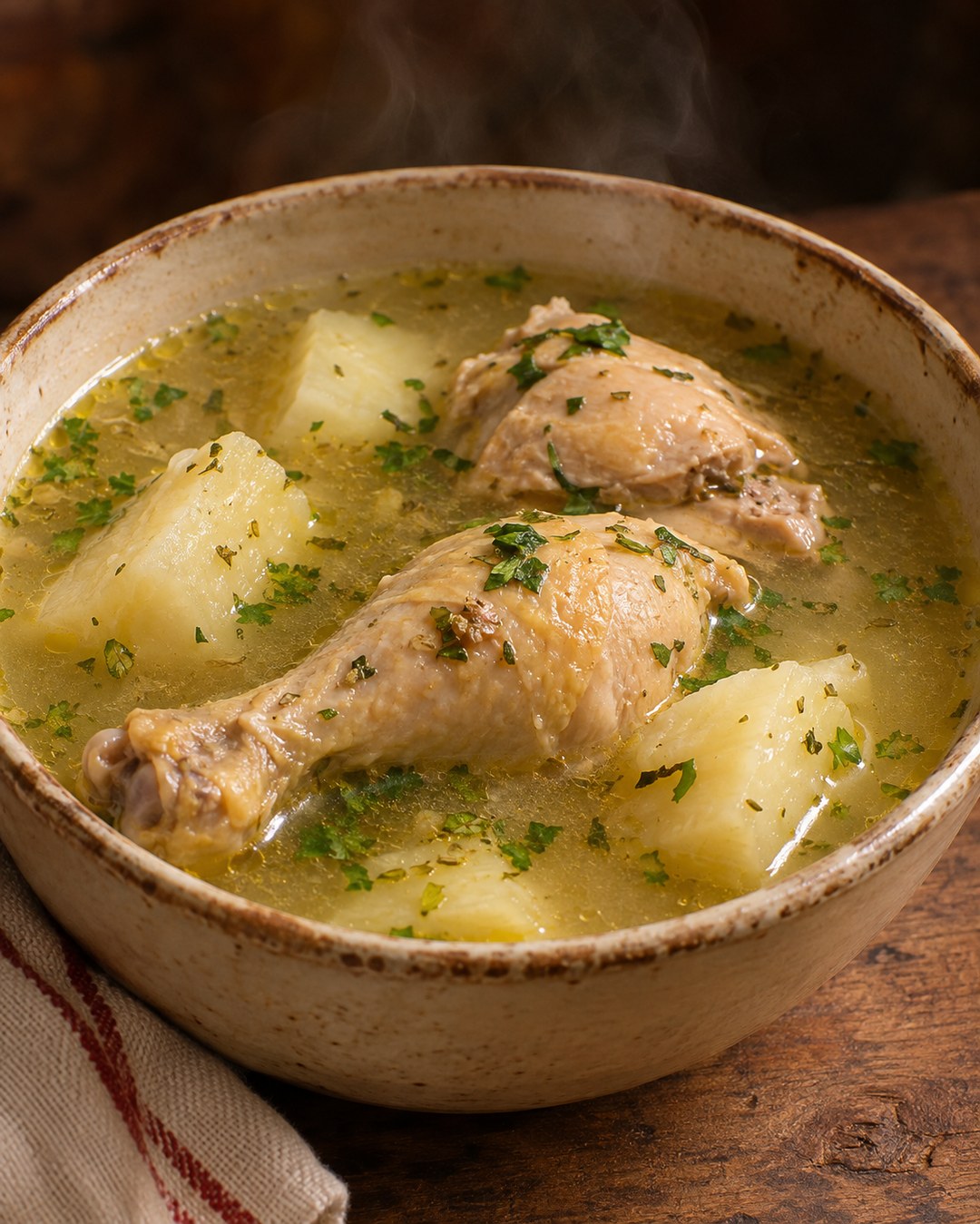
La zuppa di gallina e ñame che a Panamá si mangia nei giorni di festa, e soprattutto il giorno dopo.The hen and ñame soup that Panama eats on feast days, and above all the day after.La sopa de gallina y ñame que en Panamá se come en los días de fiesta, y sobre todo al día siguiente.
IngredientiIngredientsIngredientes
- 1 gallina o 1 pollo ruspante da circa 1,5 kg, a pezzi1 hen or 1 free-range chicken of about 3¼ lb (1.5 kg), in pieces1 gallina o 1 pollo de patio de 1,5 kg aproximadamente, en presas
- 1 kg di ñame, sbucciato e tagliato a pezzi2¼ lb (1 kg) ñame (yam), peeled and cut into chunks1 kg de ñame, pelado y cortado en trozos
- 1 cipolla grande1 large onion1 cebolla grande
- 4 spicchi d’aglio4 garlic cloves4 dientes de ajo
- 1 mazzo di culantro (o coriandolo)1 bunch of culantro (or coriander)1 manojo de culantro (o cilantro)
- 1 cucchiaino di origano secco1 tsp dried oregano1 cucharadita de orégano seco
- 2 pannocchie di mais tagliate a rondelle (facoltative)2 ears of corn cut into rounds (optional)2 mazorcas de maíz cortadas en rodajas (opcionales)
- Circa 2,5 litri di acquaAbout 10½ cups (2.5 litres) waterUnos 2,5 litros de agua
- Sale e pepeSalt and pepperSal y pimienta
- Riso bianco, per servireWhite rice, to serveArroz blanco, para servir
ProcedimentoMethodPreparación
- Pesta nel mortaio metà del culantro con l’aglio, l’origano e un cucchiaino di sale. Massaggia i pezzi di gallina con questo trito e lasciali insaporire 30 minuti.Pound half the culantro in a mortar with the garlic, oregano and a teaspoon of salt. Rub the chicken pieces with this paste and let them sit for 30 minutes.Machaca en el pilón la mitad del culantro con el ajo, el orégano y una cucharadita de sal. Frota las presas de gallina con este aliño y déjalas adobar 30 minutos.
- Metti la gallina in una pentola capiente con la cipolla tritata, copri con l’acqua fredda e porta a bollore. Schiuma la superficie.Put the chicken in a large pot with the chopped onion, cover with cold water and bring to the boil. Skim the surface.Pon la gallina en una olla grande con la cebolla picada, cubre con el agua fría y lleva a hervor. Espuma la superficie.
- Cuoci a fuoco basso 40 minuti (un’ora e mezza se è una gallina vecchia), finché la carne è tenera.Cook over low heat for 40 minutes (an hour and a half if it is an old hen), until the meat is tender.Cocina a fuego bajo 40 minutos (una hora y media si es una gallina vieja), hasta que la carne esté tierna.
- Aggiungi l’ñame e il mais e cuoci altri 30 minuti. Una parte dell’ñame si sfalda: è giusto così, è quello che addensa il brodo.Add the ñame and the corn and cook for another 30 minutes. Some of the ñame falls apart: that’s as it should be, it’s what thickens the broth.Agrega el ñame y el maíz y cocina otros 30 minutos. Una parte del ñame se deshace: así tiene que ser, es lo que espesa el caldo.
- Aggiusta di sale e pepe e, a fuoco spento, aggiungi il resto del culantro tritato fine.Adjust the salt and pepper and, off the heat, add the rest of the culantro, finely chopped.Ajusta de sal y pimienta y, con el fuego apagado, agrega el resto del culantro picado fino.
- Servi bollente nelle scodelle, con il riso bianco a parte: ognuno ne mette un cucchiaio nel brodo.Serve piping hot in bowls, with the white rice on the side: everyone adds a spoonful to their broth.Sirve bien caliente en platos hondos, con el arroz blanco aparte: cada uno pone una cucharada en el caldo.
💡 Il consiglio di Barbara.Barbara’s tip.El consejo de Barbara. Novembre a Panamá è il mese delle Fiestas Patrias: il 3 la separazione dalla Colombia, il 4 la bandiera, il 10 il Grito de La Villa qui da noi, a Los Santos, e il 28 l’indipendenza dalla Spagna. Dopo ogni festa arriva il sancocho, e si dice che rimetta in piedi chiunque. ✦ L’anima del piatto è l’ñame: si sfalda e fa diventare il brodo vellutato. Le patate non sono la stessa cosa. ✦ Il culantro per noi italiani è forte, ma qui non si toglie: se non ti convince mettine metà. In Italia lo sostituisci con il coriandolo. 🍷 Da bere: un Soave Classico, bianco morbido che non litiga con il culantro; fuori dall’Italia un Chenin Blanc.November in Panama is the month of the Fiestas Patrias: the 3rd is separation from Colombia, the 4th is the flag, the 10th is the Grito de La Villa here in Los Santos, and the 28th is independence from Spain. After every celebration comes the sancocho, and they say it puts anyone back on their feet. ✦ The soul of the dish is the ñame: it falls apart and makes the broth velvety. Potatoes are not the same. ✦ For us Italians culantro is strong, but here you don’t leave it out: if you’re not convinced, use half. In Italy replace it with coriander. 🍷 To drink: a Soave Classico, a soft white that doesn’t fight with the culantro; outside Italy a Chenin Blanc.Noviembre en Panamá es el mes de las Fiestas Patrias: el 3 la separación de Colombia, el 4 la bandera, el 10 el Grito de La Villa aquí en Los Santos, y el 28 la independencia de España. Después de cada fiesta llega el sancocho, y dicen que levanta a cualquiera. ✦ El alma del plato es el ñame: se deshace y vuelve el caldo aterciopelado. Las papas no son lo mismo. ✦ El culantro para nosotros los italianos es fuerte, pero aquí no se quita: si no te convence pon la mitad. En Italia se reemplaza con cilantro. 🍷 Para beber: un Soave Classico, blanco suave que no pelea con el culantro; fuera de Italia un Chenin Blanc.
Ti è piaciuta questa ricetta? Ce ne sono altre 101 nel libro.Loved this recipe? There are 101 more in the book.¿Te gustó esta receta? Hay 101 más en el libro.